
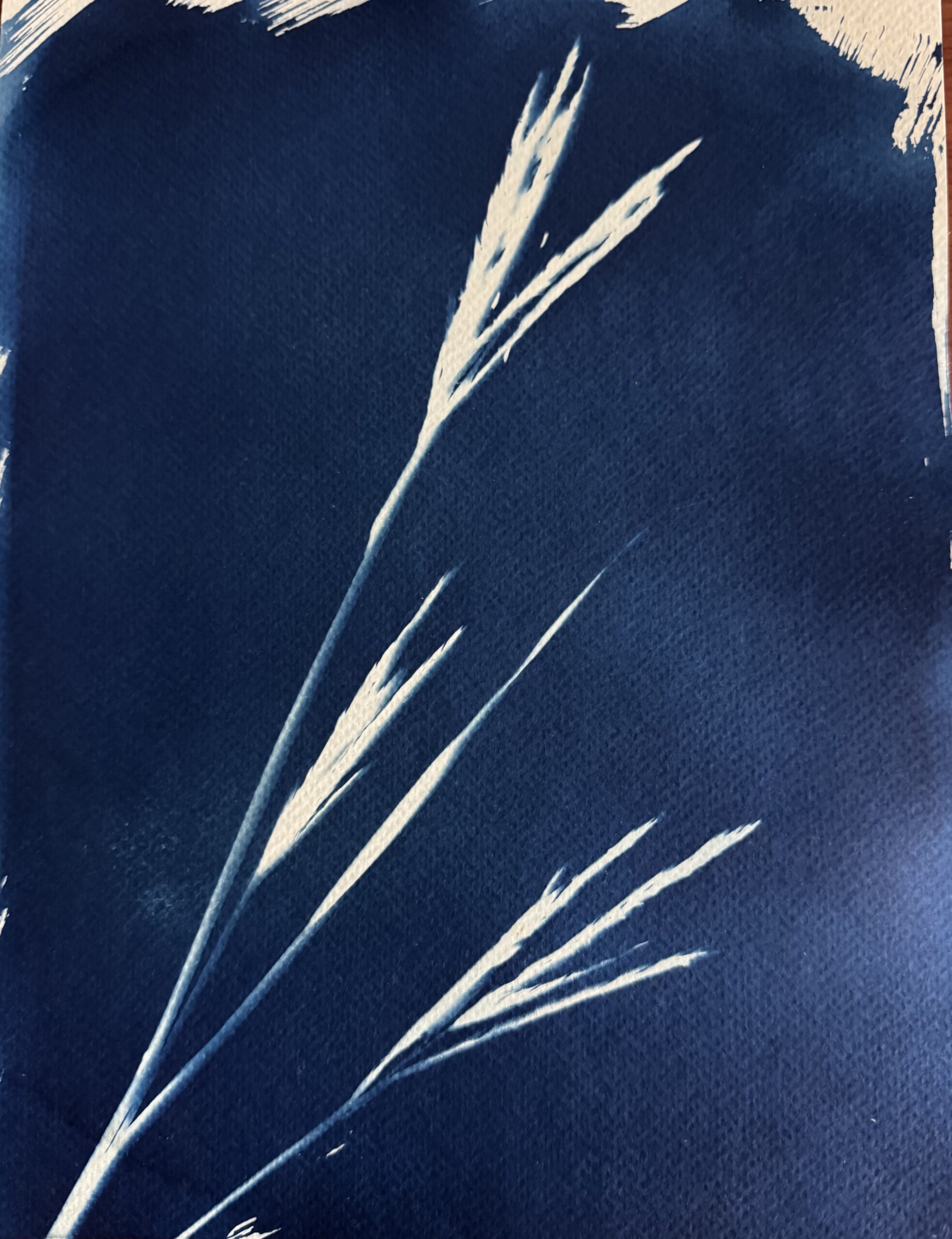
Cyanotype prints are made by coating paper in a chemical solution, placing objects on the paper, and exposing it to the sun.
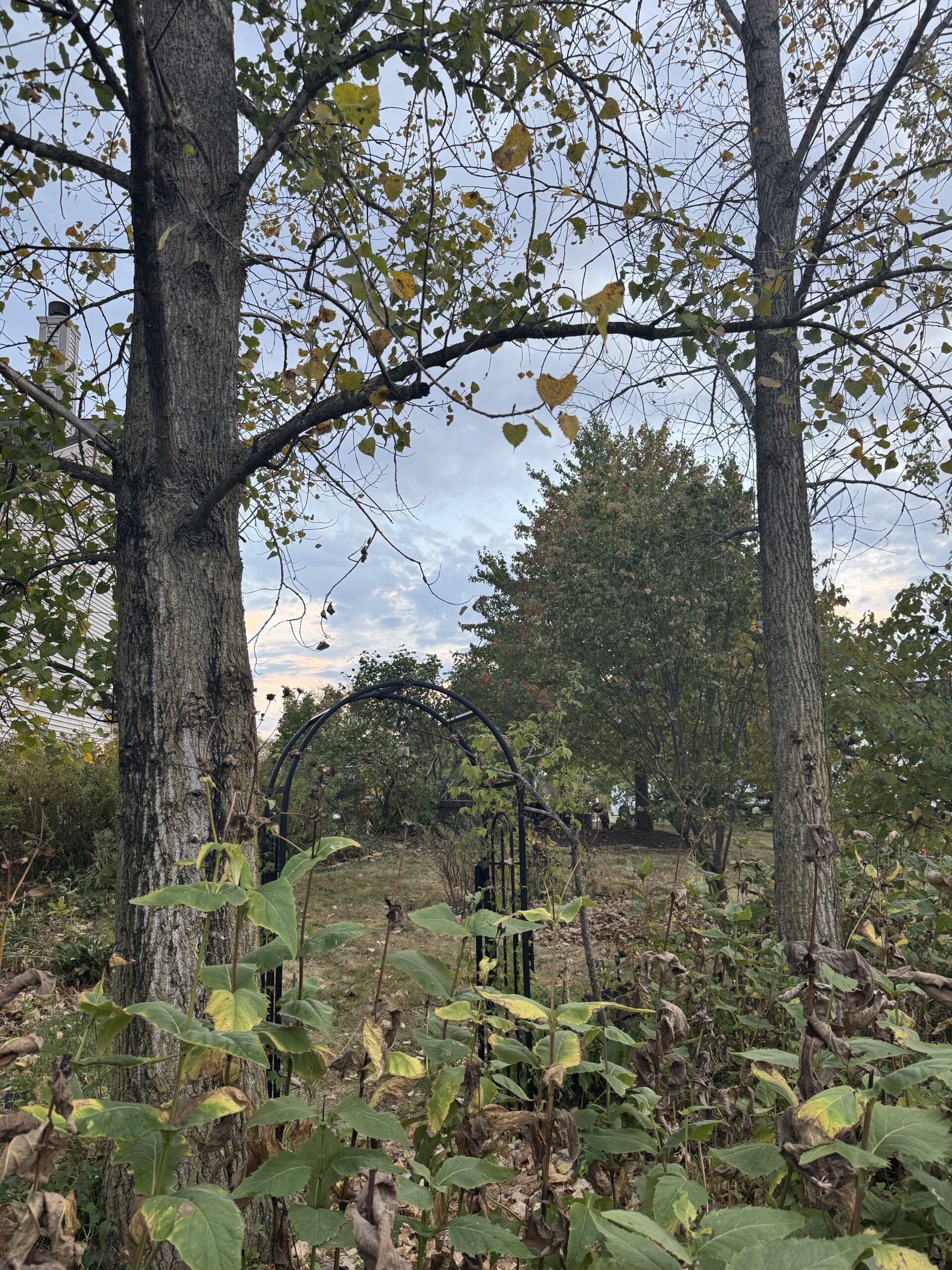
I forage for native plants in my northwestern Illinois yard, where I have gardened with native plants for more than 20 years.
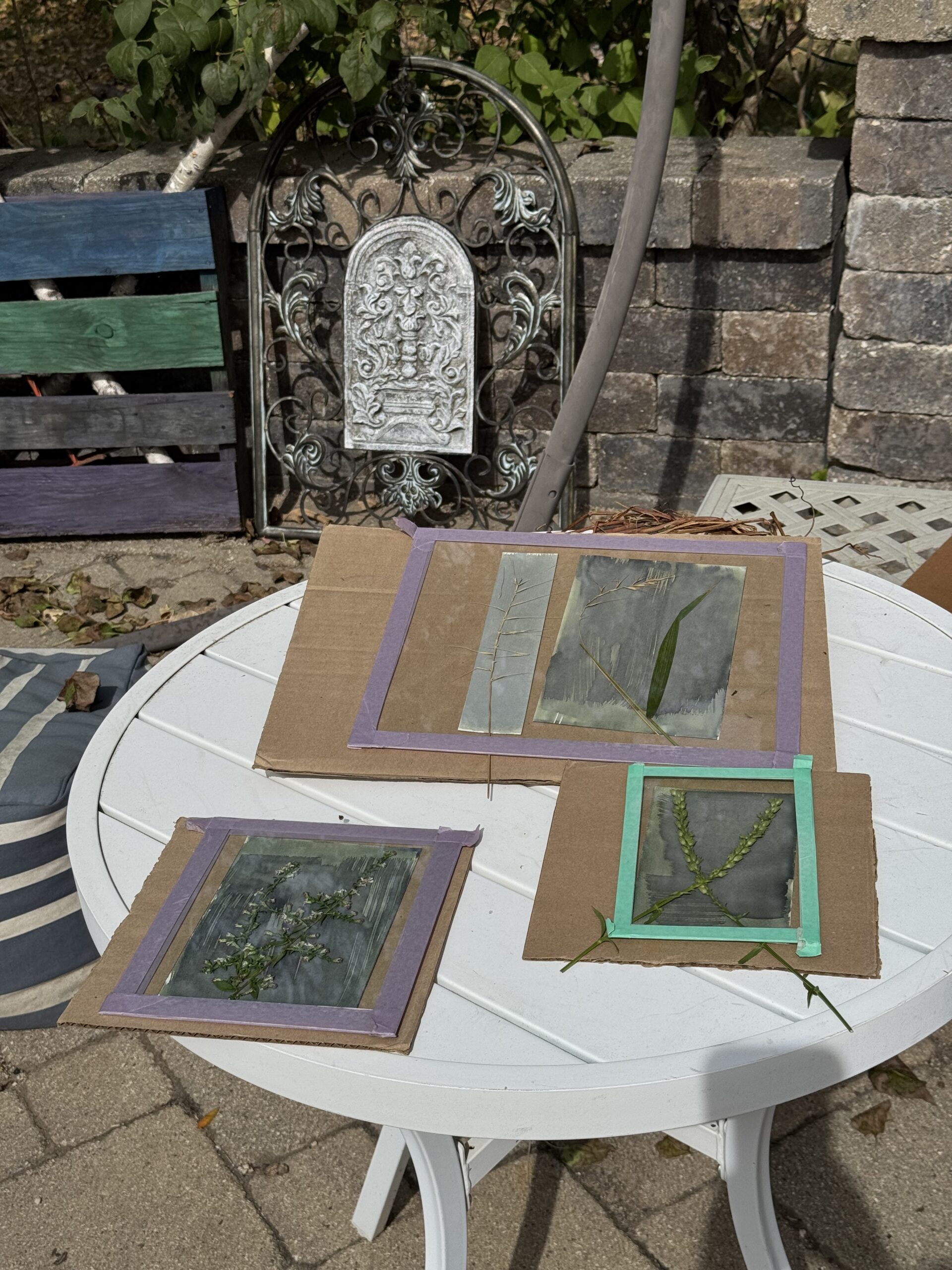
I use these plant materials on my coated paper, exposing them to the sun for 5-10 minutes (it varies significantly by season and by how sunny the day is.)
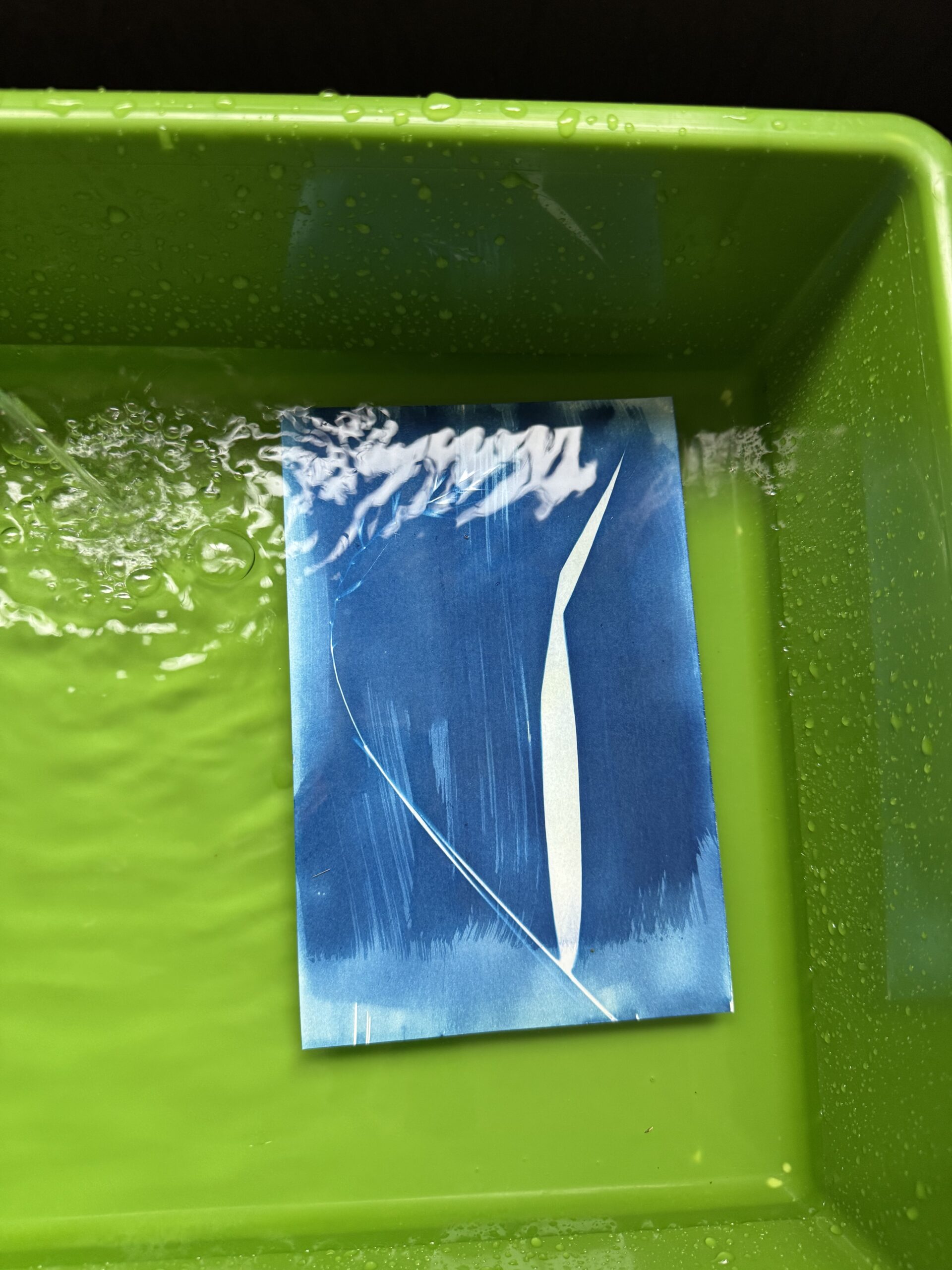
After exposure, I rinse the paper for several minutes, washing off excess solution and leaving behind the silhouette of the native plant. The deep Prussian Blue color develops over 24 hours as the prints dry, courtesy of the chemicals that, together with uv light, create ferric ferricyanide or C6Fe2N6
This is the same blue traditionally used in technical blueprints, in art of all kinds including 19th century Japanese woodblock prints like The Great Wave off Kanagawa, and is even used in modern-day cosmetics.
I love the way cyanotype prints let me capture a moment in time of the growing cycle, keeping me close to nature in my art.
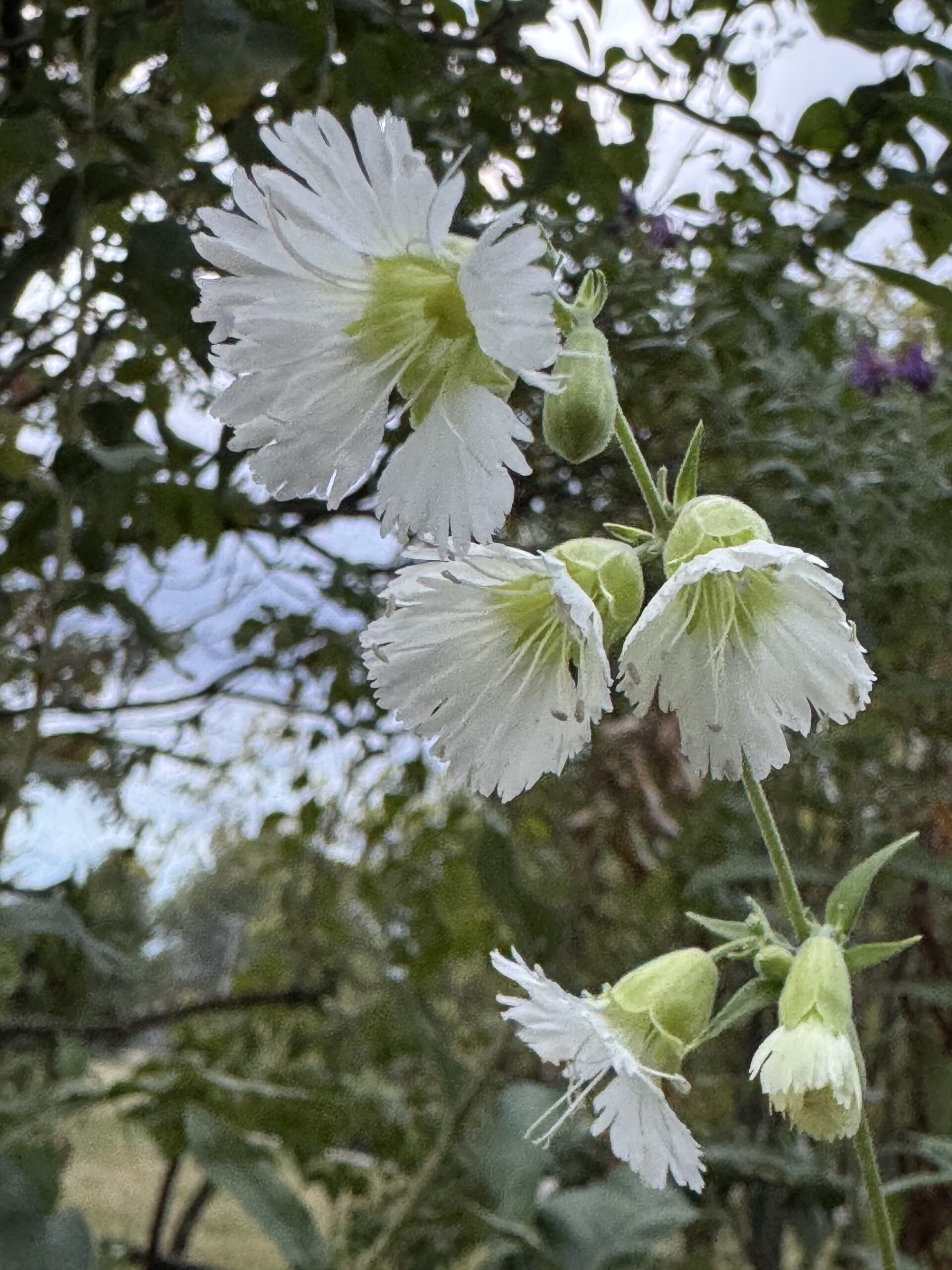
When selling my prints, whenever possible I include some seeds of the plant pictured, harvested locally and sourced ethically (meaning: I leave plenty of seeds for birds, bugs, and Mother Nature’s future plans.)
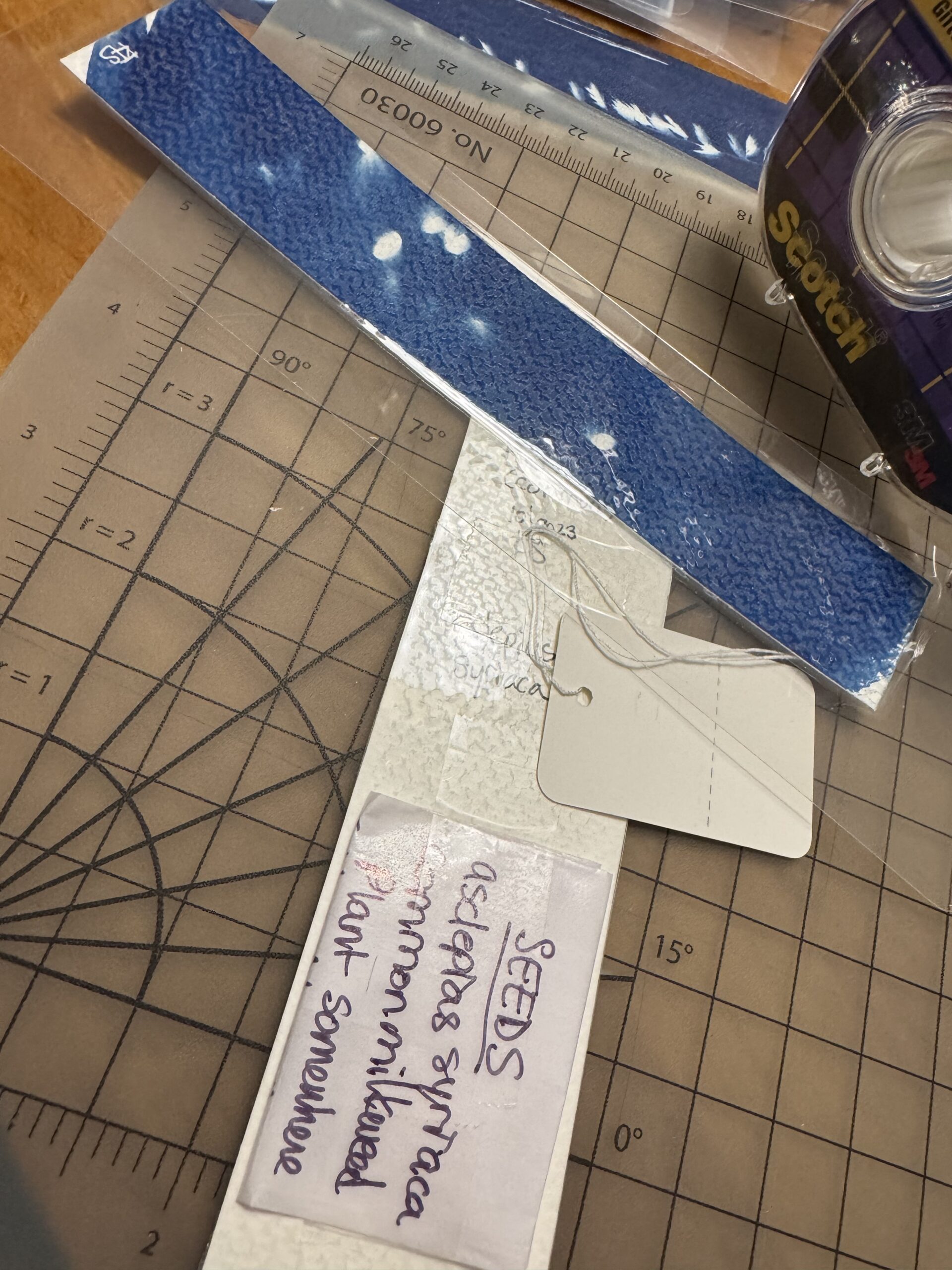
If you are not familiar with a plant I encourage you to learn more about it before planting in your area, as part of my mission is to ensure we’re being good stewards of nature by trying to avoid importing our plant troubles to other areas. Having battled more than my fair share of buckthorn I have to respect that what might be native here could be considered a problem in another area.